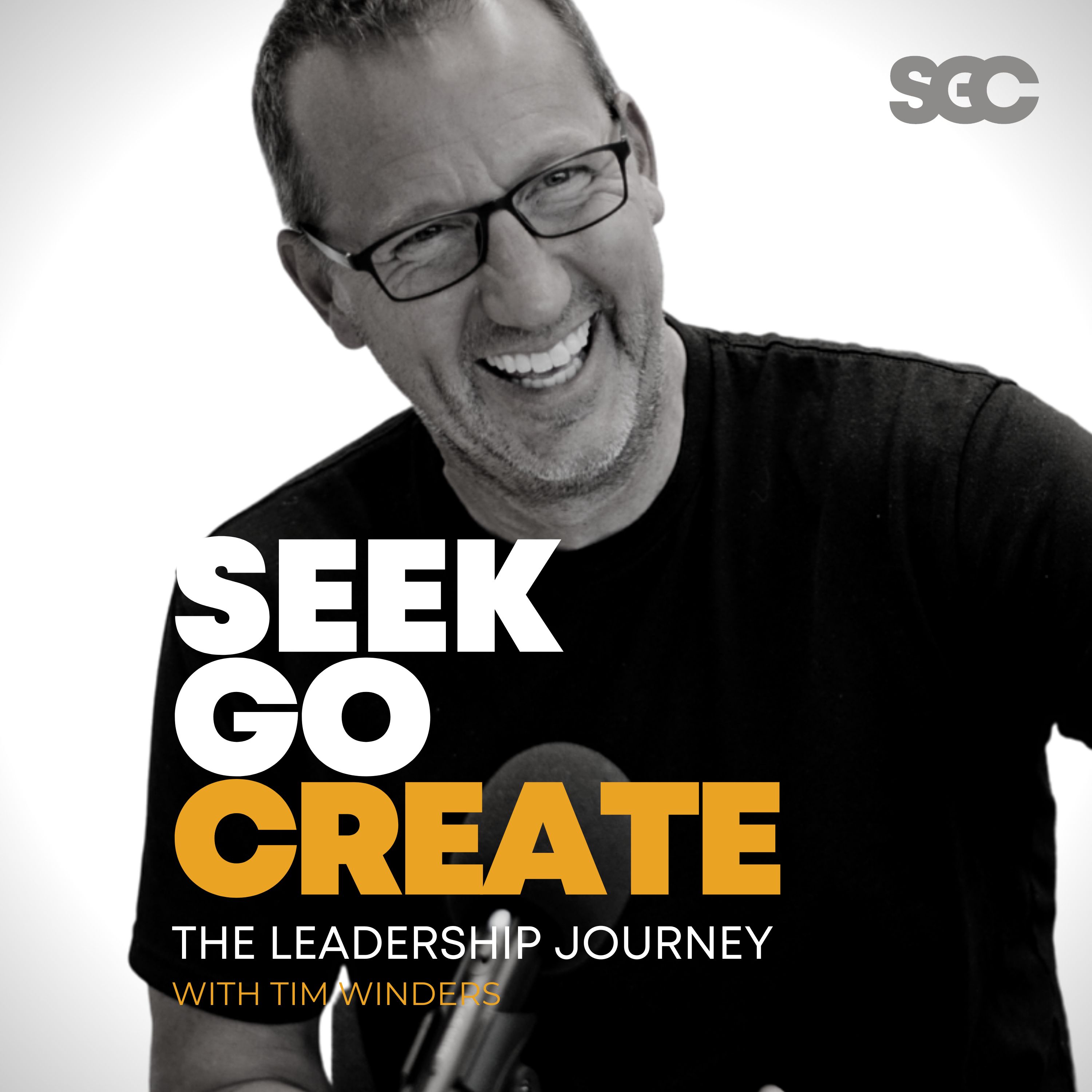
Episode 61
Did Jesus Hustle?
Is hustle culture really a sign of faithfulness, or just another way to prove our worth? This episode questions the relentless pace our culture glorifies, contrasting it with the life and mission of Jesus. Explore why hurry might not be the badge of commitment we think it is, what a faithful pace actually looks like, and how Jesus navigated urgent needs without letting busyness define him. If you've ever wondered whether exhaustion is a requirement for a meaningful life, this conversation will challenge your assumptions and offer a new perspective.
"Hurry can turn family, prayer, friendship, health, and presence into obstacles surrounding what we call the important work." - Tim Winders
Access all show and episode resources HERE
Episode Resources:
- NT90 Hub – This is the central website for the 90-day New Testament reading plan, with downloadable, printable plans, background information, and links to all episodes and resources.
- Jesus Never Hustled Episode
Episode Highlights:
00:00 Hurry As Proof
00:26 Jesus Never Rushed
01:19 Series Setup And Plan
03:46 When Hurry Shapes Fruit
06:46 My Hustle Story
09:47 Hurry As Scoreboard
10:43 Jesus Pace And Posture
13:12 Urgency Versus Hurry
13:59 Leaving While Needed
16:55 Interruptions And Presence
20:48 Love Without Panic
23:54 Rest In The Mission
26:56 Hustle And Control
29:58 Receiving Work From God
33:05 Finding A Faithful Pace
34:58 RV Lesson Slow Down
38:27 Applying It Today
41:53 Trust Over Hustle
43:31 Book Next Episode Closing
Transcript
We live in a culture that treats hurry like evidence.
Speaker:A packed calendar proves that we are important.
Speaker:Exhaustion proves that we are committed.
Speaker:An immediate response proves that we care.
Speaker:Constant urgency proves that the mission matters.
Speaker:We call it responsibility.
Speaker:Sometimes we even call it faithfulness.
Speaker:Then I read the Gospels.
Speaker:Jesus carried the most important mission in history.
Speaker:Crowds pressed Him.
Speaker:Sick people needed Him.
Speaker:Religious leaders opposed Him.
Speaker:His disciples misunderstood Him.
Speaker:His time was limited.
Speaker:He worked.
Speaker:He traveled.
Speaker:He taught.
Speaker:He healed.
Speaker:He confronted.
Speaker:He moved steadily toward Jerusalem, but He never used hurry to
Speaker:prove that He was faithful.
Speaker:Why do we?
Speaker:Maybe hurry is not proof that the mission is leading us.
Speaker:Maybe it's proof that something else is
Speaker:welcome to Seek, Go, Create.
Speaker:I'm Tim Winders.
Speaker:I read the entire New Testament recently in 90 days, compressed it, and I read
Speaker:it in a little bit of a different order than is in most of our Bibles.
Speaker:I did it in the order that it was written, not the order in your Bible,
Speaker:the order the letters actually went out to the audience in the first century.
Speaker:And what you find when you do this, it can surprise you, challenge you,
Speaker:press you, make you come up with weird questions and thoughts like I've
Speaker:done, and really it can kind of change the way you understand scripture.
Speaker:It really kind of helps you crystallize the story of the Bible
Speaker:and definitely the story of what's going on within the New Testament.
Speaker:The series, these episodes that we've been doing for some time now
Speaker:is where I'm sharing just some of those aha, some of those things that
Speaker:came to me while I was doing it.
Speaker:I've got a massive list.
Speaker:I've only scratched the surface of it, and then every time I do, I come up
Speaker:with something else, and these episodes are really just me kind of working
Speaker:through it myself and sharing that with you, just sharing those discoveries.
Speaker:So what I encourage you to do, if you haven't already, go get this reading plan.
Speaker:It's free, something you can just download.
Speaker:I think there's a, a lite version that's just got the reading plan,
Speaker:and then there's I think it's about a 10-page PDF that's got background
Speaker:details, historical things.
Speaker:Just go get it, k2m.foundation/nt90.
Speaker:Download it and start, start reading it if you haven't already.
Speaker:I think you'll get a lot out of it.
Speaker:The, link should be down in the show notes wherever you are
Speaker:listening or watching this episode.
Speaker:Let's, let's look at kind of where we're at.
Speaker:Last time, in the last episode, we kind of asked how do we keep score?
Speaker:How do we measure things?
Speaker:How do we measure ourselves, and how do we measure others?
Speaker:We talked about money, growth, possessions, power, success, and
Speaker:influence can tell us whether something is getting bigger.
Speaker:They cannot tell us what that growth is forming in people.
Speaker:The fruit tells the truth.
Speaker:That was the essence of that last episode.
Speaker:Go listen to it.
Speaker:Circle back if you have not listened to that yet.
Speaker:Hurry can produce fruit too.
Speaker:It can make us impatient with people who move more slowly.
Speaker:I am so guilty of that.
Speaker:It can turn interruptions into threats and rest into guilt.
Speaker:It can convince leaders that constant urgency proves seriousness
Speaker:or even how important we are.
Speaker:Hurry can turn family, prayer, friendship, health, and presence
Speaker:into obstacles surrounding what we call the important work.
Speaker:Over the last few months, I've also been working through another book manuscript.
Speaker:I've got three books I'm working on right now, so keep an eye out for them.
Speaker:I'm really, really pleased with the way they're forming up.
Speaker:There's one I'm working on now called Jesus Never Hustled: Why Should You?
Speaker:That title first came to me back in kinda late in the year of 2022.
Speaker:I did a solo episode by the same name, and I kinda recorded it around Christmas 2022.
Speaker:My father had just passed away.
Speaker:We were heading towards the tail end of a year, moving into a new year when, you
Speaker:know, we all sort of set goals and try to establish what's important and what's not.
Speaker:And so it was very interesting.
Speaker:So check that out.
Speaker:In other words, go back and listen to that if you haven't already.
Speaker:I recorded it around Christmas 2022 and released it in early 2023.
Speaker:At the time, I was really asking the question why Jesus never
Speaker:appeared controlled by hurry.
Speaker:Since then, I have read the New Testament in order, worked through the Comfort
Speaker:Theology series, revisited my own history with work, and returned to the Gospels
Speaker:with a different set of questions.
Speaker:The question is deeper now.
Speaker:Why have we accepted hurry as evidence of faithfulness?
Speaker:Why do we trust exhaustion as proof that we care?
Speaker:Why do churches, businesses, political movements, and families keep building
Speaker:cultures where everything feels urgent and nobody is allowed to be limited?
Speaker:The strange part is that hurry often wears the clothing of faithfulness.
Speaker:We say the mission matters.
Speaker:We say people are depending on us.
Speaker:We say this season is temporary.
Speaker:We promise to slow down after the next deadline, launch, quarter,
Speaker:election, building project, family crisis, or financial goal.
Speaker:Then the next one arrives.
Speaker:Hurry becomes normal, and normal begins to feel holy Let's talk about when we
Speaker:use hurry or hustle or busyness, and we allow it to kinda become the scoreboard.
Speaker:And I know this way of living because this is sort of the way I'm wired.
Speaker:Time and time management and productivity and hustle, that was part of what my
Speaker:makeup has always been, and I've been working to overcome that or, n- not
Speaker:allow it to rule me, for most of my life.
Speaker:So anyway, I have practiced this.
Speaker:During my years, way back when at Georgia Tech, I was already
Speaker:working, building, and pushing.
Speaker:I had a business while I was there, and I was just going at it.
Speaker:Later, when I worked in a corporate job while building a business on the
Speaker:side, I had the same thing going on.
Speaker:Rarely slept, was hustling.
Speaker:I was one that was walking fast.
Speaker:I'm probably like some of you.
Speaker:I'm a fast walker, and so people that sometimes walk fast, we just
Speaker:seem like we're scurrying around and hurrying and hustling all the time.
Speaker:For many seasons during that time when I was working corporate and had my own
Speaker:companies, that was sorta during the '90s, I would live sometimes on two,
Speaker:three, four hours of sleep every night, and I sorta treated that as an evidence
Speaker:of strength or maybe a badge of honor.
Speaker:I was proud of it, proud of how much I can carry.
Speaker:I would boast about it, all of those things.
Speaker:I'm not saying this is good.
Speaker:I'm just telling you where I was, and some of you might be able to
Speaker:relate, and some of you might not.
Speaker:I believe that hard work would create the next opportunity.
Speaker:Then the next result would create security.
Speaker:Eventually, it kept going long enough, I would reach the place where peace
Speaker:could finally begin, and I could rest.
Speaker:The finish line, it just kept moving on me.
Speaker:When we started real estate companies in the late '90s, early 2000s,
Speaker:those collapsed all around 2008.
Speaker:I've told that story in other places.
Speaker:And that season exposed more than just a bad market or failed companies.
Speaker:It exposed how much confidence I had placed in activity, control,
Speaker:and my ability to force the next result Hard work was not the problem.
Speaker:Work had become proof.
Speaker:It was my badge of honor, and output told me whether I mattered.
Speaker:It was my sense of being, my identity.
Speaker:Busyness told other people that I was serious.
Speaker:Exhaustion became that badge that I could wear and let everybody know how committed
Speaker:I was to this thing called success.
Speaker:That is when hurry becomes a scoreboard.
Speaker:And some of you know about it, some of you may not.
Speaker:You're listening and going, "I don't understand that."
Speaker:But my guess is many of us know that to some extent.
Speaker:We count messages answered, meetings attended, tasks completed,
Speaker:revenue produced, content published, miles traveled, hours
Speaker:worked, and problems solved.
Speaker:Those measures can be useful, but they become dangerous when
Speaker:they answer a question they were never designed to answer.
Speaker:Am I valuable?
Speaker:Am I faithful?
Speaker:Am I enough?
Speaker:A productive day feels like a good day.
Speaker:An unfinished list feels like personal failure.
Speaker:Rest must be earned.
Speaker:And even when we stop, the mind keeps running, cannot slow down.
Speaker:That is not merely a calendar problem.
Speaker:It's an identity problem.
Speaker:Now, let's talk about the model that most of us should have, at least those
Speaker:of us that call ourselves followers of Jesus or part of his kingdom.
Speaker:We really, really need to talk about how he functioned and how
Speaker:he operated during his mission.
Speaker:We should reject a real weak picture of Jesus.
Speaker:We often see that kind of weak Jesus.
Speaker:Jesus was not passive, detached, or afraid of demanding work.
Speaker:He traveled, taught, healed, confronted, prayed, served, trained disciples,
Speaker:endured opposition, and moved toward Jerusalem knowing what waited there.
Speaker:He could be direct.
Speaker:He acted decisively.
Speaker:He overturned tables, challenged leaders, sent disciples into
Speaker:towns, and spoke difficult truth.
Speaker:Peace did not make him passive.
Speaker:Yet the Gospels do not present him as controlled by the pace around him.
Speaker:They show long days, crowds, urgent requests, conflict, grief, travel,
Speaker:hunger, fatigue, and pressure.
Speaker:They do not show a man using frantic activity as evidence
Speaker:that his mission mattered.
Speaker:The Gospels are not an hour-by-hour schedule.
Speaker:We know that, and I'm not trying to read that into the Gospels here.
Speaker:We can't claim that Jesus never moved quickly, you know, shortened a meal,
Speaker:or felt time pressure, or looked at his watch or, you, you know, the sundial or
Speaker:whatever he would've looked at and said, "Hey, come on, guys, we gotta hustle."
Speaker:We, we don't know that that didn't occur.
Speaker:We do not have an account or a record of that in the Gospels.
Speaker:The claim that I'm making here is really about the posture or the
Speaker:mindset that we see in the Gospels.
Speaker:Jesus did not treat every request as an assignment.
Speaker:He did not allow popularity to define direction.
Speaker:He did not use output to establish identity.
Speaker:He was purposeful without being possessed by urgency.
Speaker:That distinction matters because hurry and urgency are not the same.
Speaker:Urgency recognizes something matters now.
Speaker:Hurry creates a chronic condition in which almost everything feels late.
Speaker:Urgency can produce clear action.
Speaker:Hurry scatters attention across competing demands.
Speaker:Urgency may belong to a moment or a season.
Speaker:Hurry becomes a way of living, a mindset, a posture.
Speaker:Jesus could respond To an urgent need without surrendering his life to urgency.
Speaker:This is something that's fascinating to me.
Speaker:I wanna look at a few times where Jesus left while people
Speaker:were still looking for him.
Speaker:Mark 1 gives us an early picture of this.
Speaker:Jesus heals many people in Capernaum.
Speaker:Mark says the whole town gathers at the door.
Speaker:I mean, imagine that.
Speaker:You live in a town, village, place.
Speaker:Capernaum wasn't small, but it also wasn't a large s- city.
Speaker:And everyone in the town, that's what Mark says, everyone in the town is standing
Speaker:at your door wanting something from you.
Speaker:That could really feed your ego if, if you know you can deliver on that.
Speaker:The need is real.
Speaker:The response is growing, and the opportunity looks obvious.
Speaker:The next morning, while it is still dark, Jesus goes to a solitary place and prays.
Speaker:Simon and the others search all over for him.
Speaker:Of course, they do.
Speaker:People are looking for you, Jesus.
Speaker:We've got to meet the demands of our public.
Speaker:Nope, not necessarily.
Speaker:When they find him, they say, "Everyone is looking for you."
Speaker:That sounds like success.
Speaker:That sounds like influence.
Speaker:That sounds like what many of us would crave and desire in the
Speaker:culture that we live in today.
Speaker:Not Jesus.
Speaker:People are engaged.
Speaker:The need is visible.
Speaker:Momentum is building.
Speaker:A modern strategy might say, "Stay here. Meet the demand and build this
Speaker:platform." Jesus says they must go to other towns because that is why he came.
Speaker:He leaves while people are still looking.
Speaker:He does not allow demand to define direction.
Speaker:Prayer interrupts momentum, and purpose overrules popularity.
Speaker:The open door is not automatically the assigned door.
Speaker:That is difficult for leaders, creators, pastors, business owners, parents,
Speaker:and anyone whose work attracts more demand than one person can carry.
Speaker:Need does not always equal assignment.
Speaker:Opportunity does not always equal obedience.
Speaker:A full calendar does not always equal a faithful life.
Speaker:Jesus' no was not a rejection of people or even his mission.
Speaker:It protected a yes, that bigger mission that we now know he had Jesus
Speaker:actually was, he had this ability to see the person inside the interruption.
Speaker:And so let's take a look at that.
Speaker:He refused demand, but he also allowed some interruptions to occur.
Speaker:These stories fascinate me.
Speaker:That combination really matters.
Speaker:In Mark 5, a synagogue leader named Jairus asked Jesus to come
Speaker:because his daughter is dying.
Speaker:Jesus goes with him, and the situation is obviously urgent.
Speaker:There's a death that's occurring.
Speaker:On the way, though, a woman who has suffered for years reaches
Speaker:through the crowd and touches his clothing, the hem of his garment.
Speaker:Jesus, crowds are thronging.
Speaker:He sort of seems like he could be in a rush to go to heal or what we later find
Speaker:out, raise this daughter from the dead.
Speaker:But in the midst of all this, someone touches his garment and Jesus stops.
Speaker:Jairus is waiting.
Speaker:He's standing there, and he's a leader, it says, in the synagogue.
Speaker:His daughter is dying.
Speaker:The crowd is pressing.
Speaker:From a human perspective, the interruption could not come at a worse time.
Speaker:The disciples almost sound impatient when Jesus asked who touched him.
Speaker:Everyone is touching you, they say, but Jesus sees a person the crowd cannot see.
Speaker:He listens to her, speaks to her, and calls her daughter.
Speaker:While he is still speaking, news arrives that Jairus' daughter has died.
Speaker:The story is about far more than time management, something
Speaker:that many of us would have probably allowed to run the day.
Speaker:I would have been looking at my calendar, my appointments.
Speaker:Someone's asking for me.
Speaker:I need to go.
Speaker:It's more than time management.
Speaker:It reveals who Jesus is, the arrival of God's kingdom, and his
Speaker:authority over sickness and death.
Speaker:But the scene also shows us something true about his presence.
Speaker:Jesus could move toward an urgent assignment without making the
Speaker:person beside him invisible.
Speaker:Hurry narrows attention.
Speaker:Love widens it.
Speaker:It almost…
Speaker:It's like a magnet.
Speaker:Things just come to you.
Speaker:Seems like they just came to Jesus because he was love personified here on Earth.
Speaker:Now, that does not mean every interruption deserves our attention, because we have
Speaker:many interruptions that come at us.
Speaker:Jesus did, too, I'm sure.
Speaker:Jesus also withdrew, moved on, and refused demands.
Speaker:The point is not endless availability or to have all of your notifications on.
Speaker:That's a hot topic with my wife.
Speaker:I've got no sounds, notifications, or anything on my phone,
Speaker:and, I like it that way.
Speaker:But, the point is not necessarily endless availability.
Speaker:The point is freedom to discern.
Speaker:Can we recognize, are we moving at a pace?
Speaker:Can we recognize the difference between an interruption- And an invitation, an open
Speaker:door or a closed door, as I like to say.
Speaker:Can we remain present enough to notice a person while moving toward a deadline?
Speaker:Jesus also did not let panic set the timing.
Speaker:In John 11, it gives us an even sharper scene.
Speaker:Lazarus, his friend, someone that he knows well, is sick, and
Speaker:his sisters send word to Jesus.
Speaker:John makes a point of telling us that Jesus loved Martha, Mary, and Lazarus.
Speaker:Then the story says something unexpected.
Speaker:Because Jesus loved them, he stayed where he was for two more days.
Speaker:What is up with that?
Speaker:Come on.
Speaker:Could you imagine being around him when that was going on?
Speaker:Jesus did not merely get delayed.
Speaker:It wasn't somebody else.
Speaker:He chose not to leave immediately.
Speaker:It is what it says in the scripture.
Speaker:Jesus chose that.
Speaker:By the time he reaches Bethany, Lazarus has been in the tomb for four days.
Speaker:Martha and Mary both tell him, "Lord, if you had been here, my
Speaker:brother would not have died." Jesus does not dismiss their grief.
Speaker:He weeps with them.
Speaker:Then he goes to the tomb and calls Lazarus out.
Speaker:We should not reduce that story to scheduling advice.
Speaker:John presents the delay as part of a larger sign revealing the
Speaker:glory of God, the identity of Jesus, and the call to believe.
Speaker:But the timing still confronts our assumptions.
Speaker:I mean, come on, you gotta admit, if you had been there, you would
Speaker:say, "Oh, yeah, I would just believe exactly what Jesus said."
Speaker:No, you might have been a little bit miffed if you, if your brother had died,
Speaker:and you considered yourself part of Jesus's inner circle, and he delayed.
Speaker:And you know, they might have even been whispering in the background, saying,
Speaker:"You know, we've been wanting to come, but he said, 'Let's wait a couple of days.'
Speaker:And we were going, 'Why don't we go now?' And he says, 'Nope, let's
Speaker:wait.' I'm sorry, that's kinda tough, kinda tough for us to, to swallow."
Speaker:Jesus knew the need was urgent, and he loved the people involved.
Speaker:He knew them.
Speaker:They were not just, I don't wanna say random strangers or anything like that,
Speaker:like we saw in some other examples.
Speaker:He knew these people well, yet panic did not set his pace.
Speaker:He did not confuse love with immediate action.
Speaker:He moved according to the Father's purpose, even when the
Speaker:delay could be misunderstood.
Speaker:Sometimes speed is necessary,
Speaker:But speed is not the only proof that we care.
Speaker:Now, let's talk about Jesus and rest, because I think it's something
Speaker:that many of us struggle with.
Speaker:Let's check His example.
Speaker:Mark 6 holds another tension together.
Speaker:The apostles return from their work and report what they have done.
Speaker:People are coming and going in such numbers that they do
Speaker:not even have time to eat.
Speaker:Jesus does not congratulate them for skipping meals.
Speaker:He tells them to come away to a quiet place and rest.
Speaker:You know, many of us would say, "We got momentum.
Speaker:Man, it's time to seize this opportunity and go.
Speaker:We can eat later.
Speaker:We can sleep when we die.
Speaker:Let's go, Jesus.
Speaker:Come on, let's keep going." Nope. He says, "Let's step away.
Speaker:Let's go to a quiet place and rest." Jesus initiates rest
Speaker:while the need still exists.
Speaker:They leave by boat, but the crowd reaches the destination before them.
Speaker:Jesus sees people who are like sheep without a shepherd, responds with
Speaker:compassion, and then begins teaching.
Speaker:Read carelessly, and the story can become another demand.
Speaker:Rest is good until somebody needs you, so remain permanently available.
Speaker:Keep those notifications on, because you might get a text, and you better
Speaker:jump when they say, "I need you." But the story does not end there.
Speaker:After feeding the crowd, Jesus sends the disciples away, dismisses the people,
Speaker:and goes up to the mountain to pray.
Speaker:Rest and compassion were not enemies.
Speaker:A faithful rhythm could bend without disappearing.
Speaker:Luke says that as the news about Jesus spread and crowds came to hear and
Speaker:be healed, often withdrew to solitary places and prayed The demand increased.
Speaker:The rhythm remained.
Speaker:Jesus did not wait until nobody needed him.
Speaker:He did not finish every possible task and then recover.
Speaker:He withdrew within and during the mission.
Speaker:That may be one of the clearest challenges to the hustle and hustle culture
Speaker:that most of us are familiar with.
Speaker:The work of Jesus was never finished in the sense that no need
Speaker:remained, yet he stepped away.
Speaker:He rested.
Speaker:Now, let's talk about how hurry and hustle and control tie together.
Speaker:This is a big one.
Speaker:Why do we hurry?
Speaker:Why do we hustle?
Speaker:Sometimes the workload is genuinely large.
Speaker:We've got stuff to do.
Speaker:We've got assignments.
Speaker:I mean, we have stuff going on with families.
Speaker:I mean, if you're parents of young children or things like
Speaker:that, there's a lot going on.
Speaker:If you're running a company or leading a church or an
Speaker:organization, there's stuff going on.
Speaker:Some seasons require long hours, fast decisions, emergency response, caregiving,
Speaker:financial sacrifice, or intense focus.
Speaker:Yeah, that happens.
Speaker:That's part of life.
Speaker:This is not an argument against hard work.
Speaker:It is not a universal schedule for people who have different jobs, you know, bodies,
Speaker:families, resources, or responsibilities.
Speaker:No, it's not ignoring all that.
Speaker:But hurry often carries a hidden promise.
Speaker:If I move fast enough, I can control the outcome.
Speaker:I can control my situation.
Speaker:I can control more of all that is around me, and if I can control what's around
Speaker:me, then I feel better about myself.
Speaker:If I work hard enough, nothing will fall apart.
Speaker:If I answer quickly enough, nobody will be disappointed in me.
Speaker:All of those things play into it.
Speaker:If I stay available, I will remain necessary.
Speaker:If I carry every detail, I can prevent mistakes.
Speaker:This is where the comfort theology journey that we've talked about
Speaker:connects directly to work.
Speaker:Comfort theology says favorable circumstances prove that God is with us.
Speaker:When we cannot guarantee favorable circumstances, hustle
Speaker:offers us another solution.
Speaker:Produce enough activity to quiet the fear.
Speaker:The activity may look responsible.
Speaker:Sometimes it is responsible, but constant urgency eventually reveals what it serves.
Speaker:Are we acting from wisdom or fear?
Speaker:Are we responding to reality or protecting an identity?
Speaker:Are we doing what faithfulness requires, or are we trying to
Speaker:become sovereign ourselves?
Speaker:Are we trying to be God?
Speaker:We can plan carefully, work hard, meet deadlines, build systems, and respond to
Speaker:emergencies, but we cannot control every result, no matter how hard many of us
Speaker:have tried and might even continue trying.
Speaker:We cannot control it all.
Speaker:Faithfulness belongs to us.
Speaker:Sovereignty does not, even when we try.
Speaker:The work that we like to talk about, it really needs to be
Speaker:received and not invented.
Speaker:We see this throughout John's gospel.
Speaker:Jesus describes his work in relation to the Father.
Speaker:His mission is received, not invented to prove his worth.
Speaker:That changes the pace.
Speaker:When work is invented to establish identity, like many of us have
Speaker:done, and maybe even continue to do, it has no natural boundary.
Speaker:There isn't, like, a beginning and an end necessarily.
Speaker:I mean, we throw goals in and timeframes and deadlines, but there
Speaker:isn't really a boundary there.
Speaker:We can always add another goal, audience, product, initiative,
Speaker:client, meeting, or measure.
Speaker:When work is received as an assignment discernment becomes possible.
Speaker:Does this belong to me?
Speaker:Is this the time?
Speaker:Who should carry it with me?
Speaker:What must I decline?
Speaker:Which outcome belongs beyond my control?
Speaker:A person may still work with great intensity after answering those questions.
Speaker:Intensity's really not the enemy.
Speaker:That's not what I'm talking about, passion, intensity.
Speaker:That's not what I'm talking about, being passive.
Speaker:The problem begins when work carries a burden it was never meant to.
Speaker:It cannot establish our worth, guarantee our safety, keep every
Speaker:person pleased, or make us sovereign.
Speaker:It isn't as if we become gods of our little world because we're
Speaker:controlling it with all the activity, the hurriness, the busyness, and the
Speaker:hustle that we are putting in place.
Speaker:Before Jesus began his public ministry, before the sermons,
Speaker:healings, crowds, and visible results, the Father called him beloved.
Speaker:That was one of the first things we see.
Speaker:Then Jesus worked from that place.
Speaker:He did not work to earn it.
Speaker:He didn't, He didn't ever say that, "The Father is gonna be so proud of
Speaker:me when I heal X number of people, or when we feed all these people,
Speaker:or when I cast out this demon."
Speaker:Nope.
Speaker:He didn't work to earn any of that.
Speaker:We need to be careful here because Jesus' relationship with the Father is unique.
Speaker:Still, we can learn from it.
Speaker:The order tells us something important about the kingdom.
Speaker:Identity does not begin with output.
Speaker:Work can express love.
Speaker:It can serve people, create value, cultivate creation, support a
Speaker:family, and fulfill a responsibility.
Speaker:It cannot tell us what a person is worth.
Speaker:Let's look at what a faithful pace requires.
Speaker:And as I've been saying, this is not something that I have figured out.
Speaker:I am in the process of working through these things myself, but I'm beginning to
Speaker:see it, and I do think that I am learning.
Speaker:A faithful pace is not one universal schedule.
Speaker:In other words, we're not gonna make a doctrine out of it or a
Speaker:formula or anything like that.
Speaker:It really is individual A parent with young children may have a
Speaker:different rhythm from someone like me who just lives with my spouse.
Speaker:A business launch may require more intensity than a stable season.
Speaker:A medical emergency or a condition may erase the plan for that day.
Speaker:Some people control their calendar more than others.
Speaker:Others work assigned shifts, hold multiple jobs, care for family members, live with
Speaker:disability, or carry responsibilities that cannot simply decline The
Speaker:invitation is not to copy someone else's routine, it is to tell the truth about
Speaker:what is setting our personal pace.
Speaker:What has God actually given me to carry?
Speaker:What have I added because I fear disappointing people or God?
Speaker:Where does urgency reflect a real need, and where has urgency become
Speaker:culture or the way we do it?
Speaker:What requires my leadership?
Speaker:What requires delegation?
Speaker:What should stop?
Speaker:What can wait?
Speaker:What person am I failing to see because the task feels more important?
Speaker:For me, part of this lesson became physical when Gloria and I moved into
Speaker:our RV, our motor coach, around the end of 2018 and beginning of 2019.
Speaker:You know, it's fascinating.
Speaker:My old approach to travel was simple.
Speaker:You know, you kind of pack quickly, and I can pack well, by the way.
Speaker:It's one of my superpowers.
Speaker:Leave early and hustle and go, go, go.
Speaker:Drive a boatload and get there and, and then you can relax once you get there.
Speaker:Reach the destination, then enjoy the place.
Speaker:A large motor coach, almost 40 feet long, and a bunch of stuff
Speaker:going on, and truthfully, this thing is just a box on wheels.
Speaker:Nothing aerodynamic about it.
Speaker:It did not reward that type of approach.
Speaker:Weather mattered.
Speaker:Wind, wind was not my friend.
Speaker:Road conditions, freezing temperatures.
Speaker:I drove it many times in snow.
Speaker:Water, fuel, heat, electrical systems, size, weight, all
Speaker:that required my attention.
Speaker:Rushing could turn a small oversight into an expensive
Speaker:or possibly dangerous problem.
Speaker:I was forced to slow down, pay attention, and accept that the
Speaker:journey itself required care.
Speaker:And it's really during that time where I believe that I heard the
Speaker:Lord tell me, "Tim, don't bust your tail and hustle just to get to where
Speaker:you're going. I need you to enjoy the journey." And I don't know about some
Speaker:of you, but I will often look to the destination and not enjoy the journey.
Speaker:I had to slow down and take care of that 40-foot vehicle, our tiny home on wheels,
Speaker:so that I could, be a good steward.
Speaker:Some assignments cannot be carried faithfully at the speed that we prefer.
Speaker:I also began to see, like I was talking earlier, how often I treated
Speaker:the journey as dead space between where I was and where I wanted to be.
Speaker:Hurry kept telling me that life would begin when we arrived, when the
Speaker:project was complete, when the goal was reached, or when the problem was solved.
Speaker:But life was already happening along the road.
Speaker:There were people to notice, places to enjoy, conversations to
Speaker:receive, and lessons I would miss if reaching the destination remained
Speaker:the only measure of a good day.
Speaker:Enjoying the journey does not mean ignoring the destination.
Speaker:It means refusing to sacrifice the life God is giving us now for
Speaker:the life we hope to reach later.
Speaker:That remains true beyond just the travel example that I just gave.
Speaker:A faithful pace can still be demanding.
Speaker:It can require discipline, sacrifice, focus, and difficult decisions.
Speaker:But it is directed.
Speaker:It accepts limits.
Speaker:It leaves enough attention to notice people.
Speaker:It refuses to make exhaustion the evidence of devotion.
Speaker:Let's look at what it all means, what it meant then, what it means
Speaker:now, and how it applies to us.
Speaker:Jesus carried his mission within the real limits of a human body.
Speaker:He was God, and he was human.
Speaker:First century travel, opposition, crowded days, and limited time.
Speaker:The Gospels present him as the Son announcing and embodying God's kingdom,
Speaker:not as a modern productivity teacher.
Speaker:He prayed, withdrew, moved on, accepted interruption, showed compassion,
Speaker:and remained directed by the Father rather than by public demand.
Speaker:Where do we often misread this in our world today?
Speaker:We can turn Jesus into a model for endless service because the need is great.
Speaker:We can also turn rest into a private lifestyle project
Speaker:centered on personal comfort.
Speaker:Both readings miss the movement.
Speaker:Jesus neither worshiped productivity nor protected ease.
Speaker:You know, He wasn't just sitting around waiting for the Lord,
Speaker:because He was the Lord, but He wasn't just sitting around waiting.
Speaker:He had stuff to do.
Speaker:He was doing it.
Speaker:He was going about His Father's business, but He just seemed to be
Speaker:doing it in a methodical, steady way.
Speaker:He lived a purposeful, present, surrendered life.
Speaker:What does that mean for us?
Speaker:In how we treat people, a faithful pace keeps people from becoming
Speaker:obstacles to our productivity.
Speaker:This is something that I have got to watch for, 'cause I could be looking
Speaker:at my calendar or my watch or time and things on my list and easily
Speaker:forget that people are around me.
Speaker:In religion and church, it refuses to consume volunteers, staff, and leaders
Speaker:to keep a weekly machine operating.
Speaker:In politics, it resists manufactured urgency that keeps
Speaker:people fearful, reactive, angry, and therefore easy to control.
Speaker:In business and work, it values clear priorities, honest limits,
Speaker:delegation, rest, and excellent work without making panic the
Speaker:culture or even control, possibly.
Speaker:How we treat people, organize church, respond to politics, lead
Speaker:organizations, and conduct our work reveals whether purpose or
Speaker:hurry or hustle is directing us.
Speaker:Jesus, as we've said, He had a real mission, the most important
Speaker:mission in all of history.
Speaker:He worked, served, confronted, endured, and moved steadily toward Jerusalem,
Speaker:but demand did not define Him.
Speaker:Popularity did not direct Him.
Speaker:Interruption did not make people invisible.
Speaker:Rest did not make Him irresponsible.
Speaker:Limits did not make Him unfaithful.
Speaker:Maybe the opposite of hustle is not laziness.
Speaker:Maybe it is trust Do the work you have been given.
Speaker:Tell the truth about your limits.
Speaker:Let other people contribute.
Speaker:Leave when popularity asks you to stay.
Speaker:Stop when fear demands one more task.
Speaker:Notice the person in front of you or the one that touches the hem of your garment.
Speaker:Enjoy the life that is happening along the way.
Speaker:Enjoy the journey.
Speaker:The journey is not merely the delay before the destination.
Speaker:Rest without pretending the mission depends entirely on you.
Speaker:If it is to be, it's up to me.
Speaker:That's not the case.
Speaker:This is not easy for me.
Speaker:I know how quickly hard work becomes proof, how easily responsibility
Speaker:becomes control, and how natural it feels to believe one more result,
Speaker:one more task, one more thing will finally create peace in my life.
Speaker:I will reach that destination of peace or Sabbath.
Speaker:But peace cannot remain the reward waiting at the end of the work.
Speaker:The work will never be completely finished.
Speaker:It is always there.
Speaker:Jesus never hurried to prove that he mattered.
Speaker:Neither do we.
Speaker:I'm also bringing this larger message that we've been talking about here together
Speaker:in a book that I've been working on.
Speaker:I mentioned this earlier.
Speaker:Jesus Never Hustled: Why Should You?
Speaker:I'm kind of proud of this.
Speaker:This is kind of maybe a great work that I've had in me for a while.
Speaker:I'm working through the author edits now, so watch for the book coming out soon.
Speaker:Next time, on the next episode, we will go deeper into what happens
Speaker:when work becomes more than service, stewardship, and contribution.
Speaker:What happens when work becomes proof of your worth?
Speaker:Don't forget, the reading plan is at k2m.foundation/nt90.
Speaker:Go get it if you haven't already.
Speaker:Share it.
Speaker:I tell you what, there might be someone who needs that.
Speaker:Share that.
Speaker:Go to the link and share it or share this episode.
Speaker:Something, just share it.
Speaker:I so wish and desire that there were massive numbers of people reading the
Speaker:New Testament in order and in context.
Speaker:I think it would change the way those of us who are followers of Jesus and
Speaker:those of us who are in God's kingdom, how we live and understand His kingdom.
Speaker:So go take a look at it.
Speaker:Go get it.
Speaker:And if what you were taught as you're doing that doesn't match
Speaker:what you read, trust the text.
Speaker:I'm Tim Winders.
Speaker:Keep seeking.
Speaker:Hurry says the mission depends on you.
Speaker:Faithfulness remembers whose mission it is.
Speaker:See you next time